
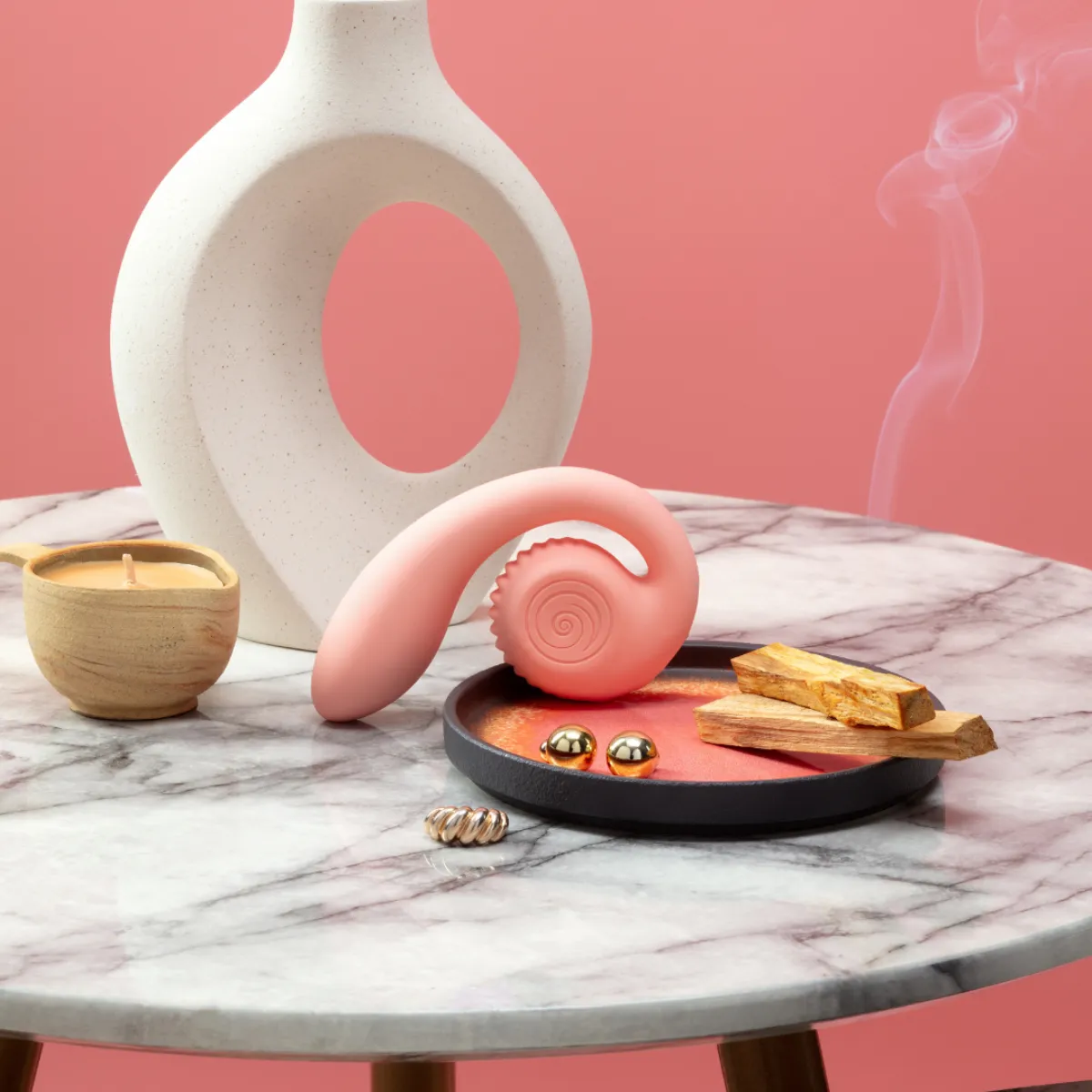
The feature that sells me on the idea of SVibe is separate control. Curve has two motors, and each can be adjusted independently. That's a useful starting point for a review because it tells you something specific about the product: you can choose how the two stimulation areas work together.
Then there's the moving shell. Once you see that external head move relative to the body of Curve, the unusual shape starts to make sense. It's a mechanism with a purpose, not simply a different outline for the product photo. Those two features are where I'd spend my attention.
My take is straightforward: SVibe is worth considering if you're interested in adjustable dual-stimulation designs. I'd choose a model by looking at its controls and construction first. Colour can come next. Though, admittedly, colour is usually the thing that gets us to open the page in the first place.
What I mean by useful control
Imagine a product with two separate areas, each with a motor. If the controls are independent, you can change the setting for one area separately from the other. That's what interests me about Curve's specification.
The useful word here is independently. It gives you a way to build a combination rather than selecting one shared setting for the whole object. I like being able to connect a button to a particular function. It makes the feature easier to understand before you even get to the list of modes.
Product demonstrations also describe operating a single motor or combining both. I see that as practical versatility: the same design supports different configurations. You can explore the control for one area, then consider what combining the two adds to the product's appeal.
That's a much clearer buying question than simply asking whether a model has lots of settings. What do those settings let you change? Where are the controls? Can you tell which part they operate? For Curve, separate adjustment is a meaningful answer to the first question.
The shell gives Curve its identity
SVibe names the external-head mechanism Slide'n'Roll. The shell can move in relation to the main body, with the aim of following changes in position and supporting external contact. It is the feature I'd want to see demonstrated from the side.
Why the side? Because you can see the relationship between the pieces. A front view shows the shape; a side view makes the articulation more apparent. That's a small distinction, but it can make a product demonstration considerably more useful.
I like the thinking behind that moving element. A dual-stimulation product has to accommodate two areas, and Curve gives one of those areas an articulated head. The mechanism is a concrete part of the design, something you can point to and describe.
The handle completes the picture. It gives the hand a separate place to hold the product, leaving the rounded external part to do its own job. I find that arrangement easy to understand visually. Grip, curved body, moving shell: three recognisable parts with different roles.
Five advantages I'd put on the shortlist
1. Separate motor settings
This is my strongest reason for considering Curve. Independent adjustment offers a choice about the balance between two areas. I'd give that feature its own line in a comparison, rather than hiding it under a general heading such as performance.
2. A head designed around movement
The mobile shell gives Curve a distinctive approach to external contact. I appreciate that the design can be explained mechanically. You can watch the part move and understand why it's there.
3. Single or combined operation
The ability to use one motor or combine both gives the product more than one configuration. To me, that is a useful kind of range: different options within a design whose basic layout remains easy to follow.
4. A dedicated grip
Curve's handle is visible in the product photographs and demonstrations. It helps make the orientation clear. When I compare shapes, I want to be able to identify where a hand would naturally hold the object.
5. Other models offer other approaches
Gizi and Jovi make the range more interesting because each introduces a different idea. SVibe positions Gizi around hands-free dual stimulation, while Jovi is a couples ring with a remote. That gives you a reason to compare models beyond their names.
Curve, Gizi or a couples model?
I'd begin with what attracted you to the range. If it was the moving head and the handle, Curve deserves the closest look. If it was the hands-free concept, Gizi is the more relevant place to start. If the conversation is about choosing something together, Jovi brings the remote-control idea into focus.
| What you're comparing | The detail I'd look at | Why it interests me |
|---|---|---|
| Curve | Moving shell, grip and separate controls | The relationship between movement and adjustment |
| Gizi | Rounded, flexible form | A different approach to placement |
| Jovi | Couples-ring format and remote | The possibility of sharing the controls |
I would keep that comparison at the level of design intent. It helps you decide which product page or demonstration to spend time with. Once a model stands out, its own specifications become the useful reference.
The video here looks at Jovi and Jovi Arc. They're part of the wider range, so it's a chance to see how the couples models are presented. I like having a visual reference next to the names. It makes a collection feel less like a list of similar-sounding products.
A customer's comparison of Jovi and Jovi Arc
One customer's take on Jovi and Jovi Arc, shared by SVibe.
What I look for in a product demonstration
First, I watch the controls. Where are they, and can the presenter show what each one does? With Curve, the independent motors make this particularly relevant. A demonstration of the controls can explain something a still photo can't.
Next, I watch the moving shell. I want to see the part from more than one angle and understand how it relates to the main body. A close view is helpful here. Even a short clip can communicate a lot when it focuses on the mechanism itself.
Then I look at the grip. A hand holding the product gives the shape some context. It also makes the distinction between the handle and the external head easier to see. For me, those ordinary visual details make a demonstration worth watching.
Finally, I listen for the model name. Curve, Gizi, Jovi and Jovi Arc each deserve their own description. Keeping track of the name helps attach an interesting feature to the right product, which makes the eventual comparison much more satisfying.
A comparison I find genuinely helpful
Robyn's Curve and Gizi article for Lovense discusses their different forms. I like that kind of side-by-side view because it encourages a closer look at the construction rather than stopping at the family resemblance.
When I read a comparison, I make a short mental list: shape, flexibility, grip and controls. Those are things I can connect to the photographs. If a description catches my interest, I go back to the image and find the part being discussed.
It sounds almost too simple, but it works well as a way to read. You move between the review and the product, building a clearer picture of what makes each model distinctive. A rounded form means more once you know how it relates to placement; a handle means more once you see it held.
For SVibe, that's where the appeal becomes specific. The range gives you enough visible differences to have a real preference. You're choosing between approaches, not merely choosing the same idea in another colour.
The everyday details I'd organise
Once a model is chosen, I'd give its accessories a place of their own. Keeping the charging cable with the product makes it easier to find later. The model's instructions belong nearby too, especially while you're getting familiar with its care requirements.
I also like a clear storage routine: clean according to the manual, let the product dry as instructed, and put it away in its intended storage space. It's an ordinary part of owning something you chose with care.
Reading the controls section of the manual is another small step I'd make time for. It gives names to the functions shown in the demonstration and helps connect the specification to the actual buttons. With independently controlled motors, that connection is worth understanding.
For more of our editorial coverage, the Cumen Shop blog is the place to return to. My preference is always for reviews that help readers picture the object clearly, right down to where the controls and cable belong.
The feature I'd remember tomorrow
For me, it's still the combination of a moving shell and separate motor control. One concerns the shape; the other concerns adjustment. Together, they give Curve an idea I can understand and a reason to keep looking.
Gizi adds another option for someone drawn to its rounded form and hands-free positioning. Jovi opens a separate conversation about shared control. I like that the range lets those choices remain distinct.
If SVibe has caught your attention, I'd start with the model whose design makes you curious. Watch its moving parts, locate its controls, and see whether the way it's built appeals to you. That's a solid reason to put it on a shortlist, and a much more interesting one than a broad claim that something is simply great.